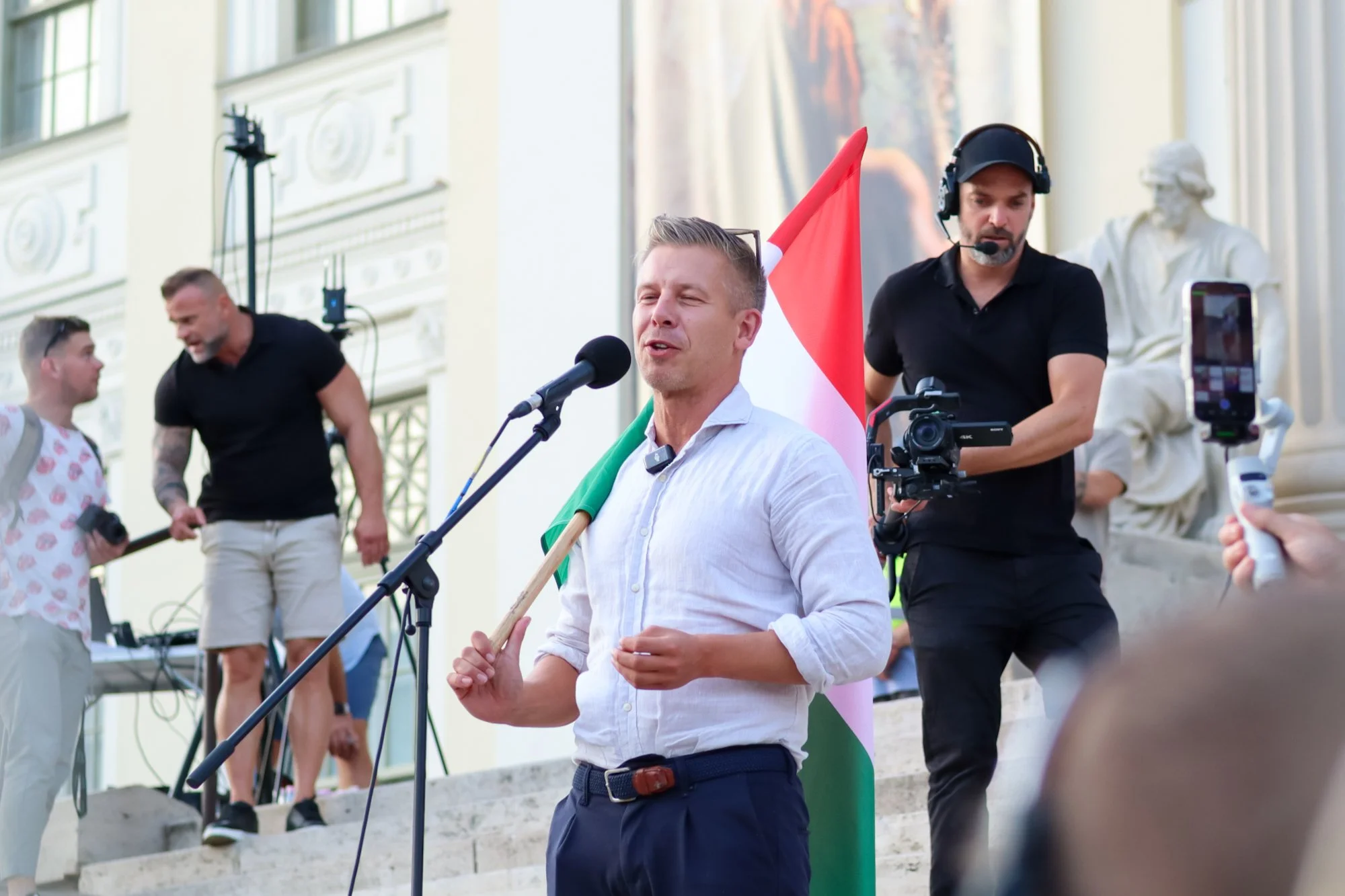
Hungary election delivers landslide victory, ending Orbán’s 16-year rule
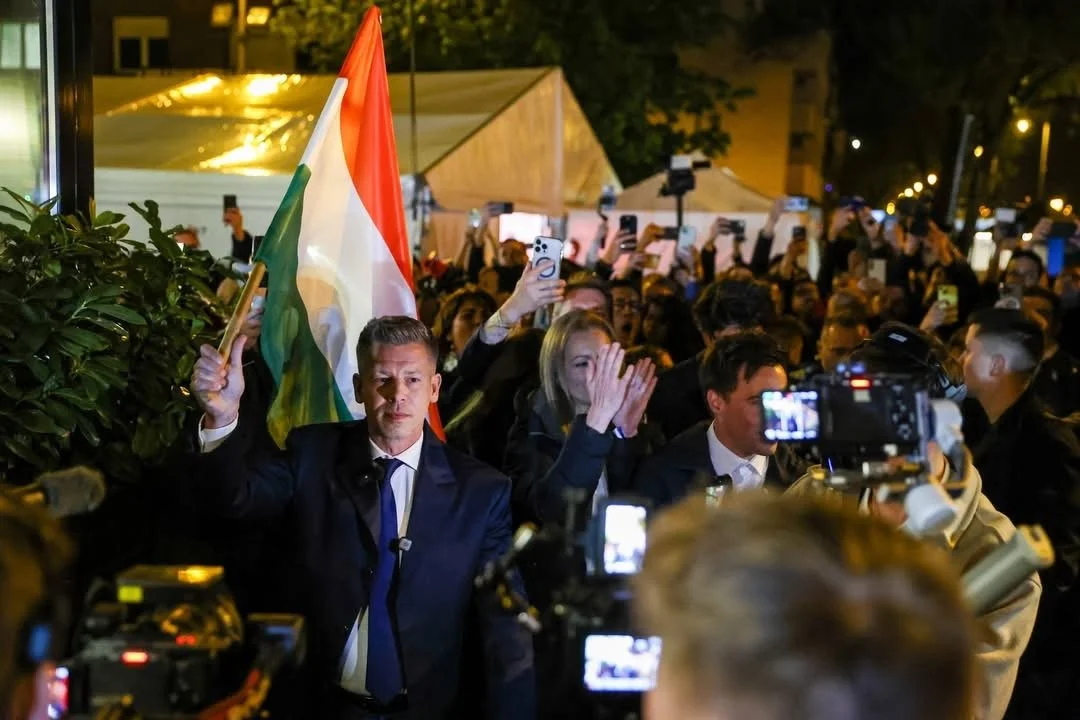
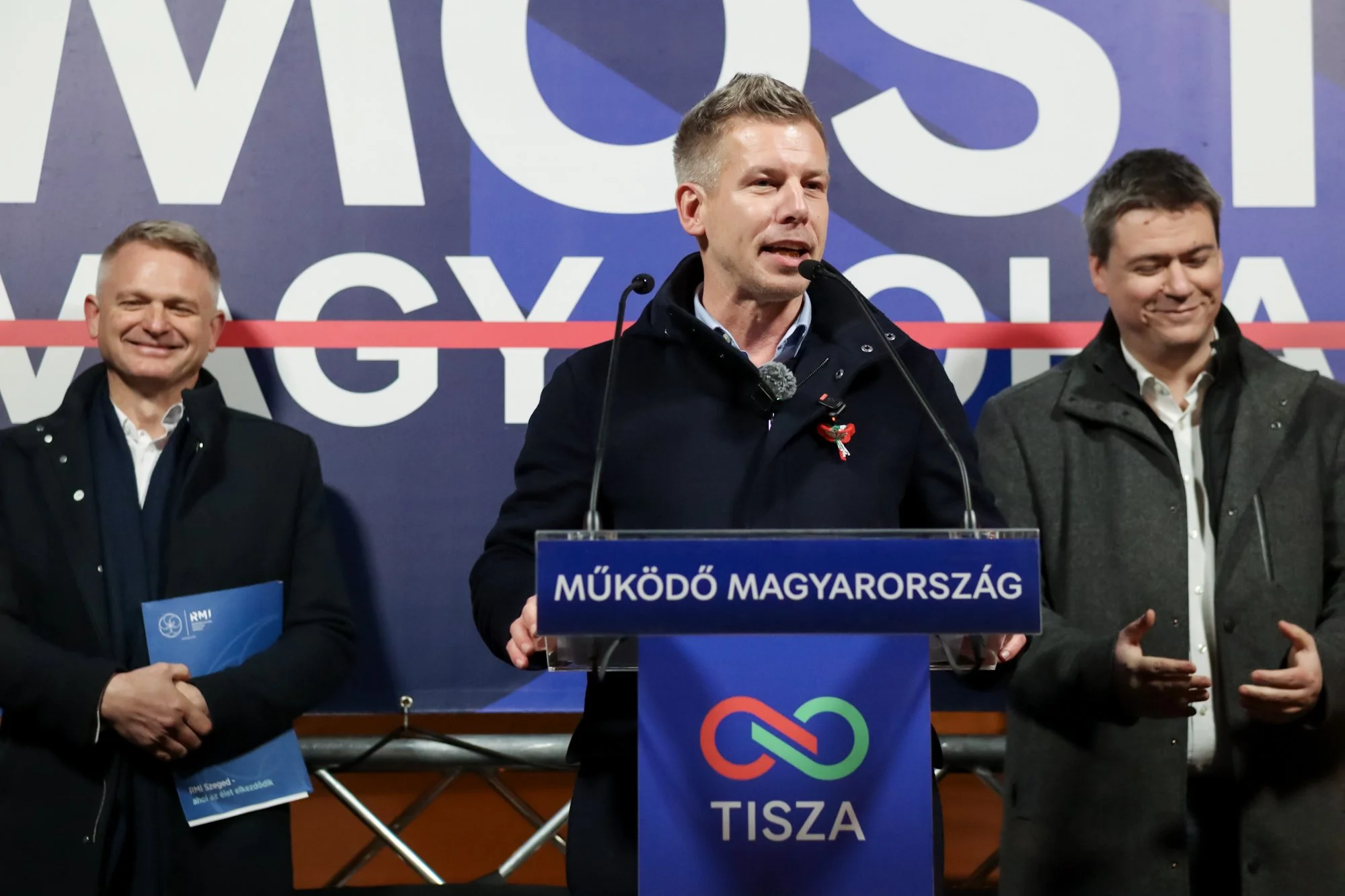
Péter Magyar on election night in Budapest. Photo source: Tisza Party’s official Facebook page
Hungary’s parliamentary election has resulted in a landslide victory for the opposition Tisza party, led by Péter Magyar, marking a historic shift in the country’s political landscape and ending Prime Minister Viktor Orbán’s 16-year rule.
With nearly all votes counted, Tisza secured a two-thirds parliamentary majority, giving it the power to form a government and potentially enact sweeping constitutional changes.
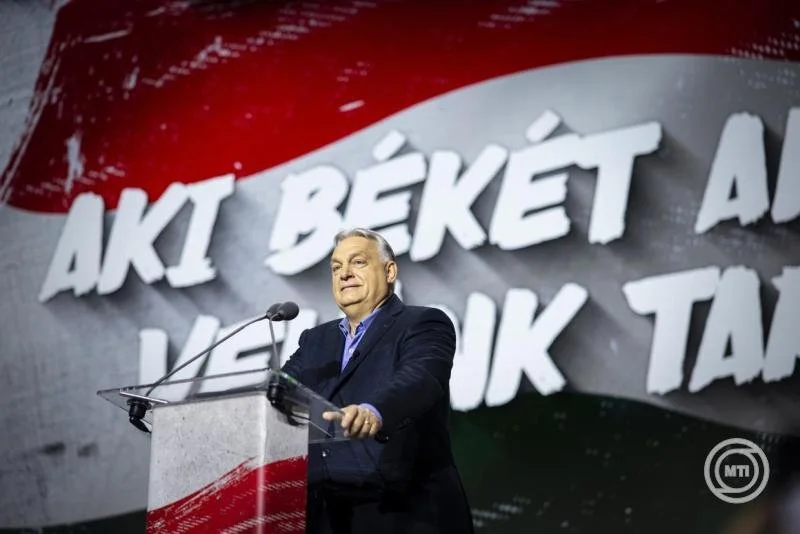
Orbán conceded defeat on election night, telling supporters: “The election result is painful for us, but clear.”
Magyar, addressing supporters after the results became clear, said: “With the two-thirds majority allowing us to amend the constitution, we will restore the system of checks and balances. We will join the European Public Prosecutor's Office and guarantee the democratic functioning of our country. We will never again allow anyone to hold free Hungary captive or to abandon it.”
The result represents one of the most significant political changes in Hungary since the democratic transition. Turnout – at around 80% – was widely reported as the highest since Hungary’s democratic transition in 1989, reflecting unusually strong voter engagement and growing demand for political and economic change.
International coverage has been extensive, with major outlets including The New York Times, Reuters and the Associated Press describing the outcome as a decisive moment for Hungary’s future direction, with potential implications for its relationship with the European Union.
Magyar, a former Fidesz insider who emerged as Orbán’s main challenger, campaigned on anti-corruption reforms, economic renewal and closer alignment with European institutions. Analysts say the scale of the victory could pave the way for changes affecting governance, EU relations and access to previously frozen funds.
Domestic reaction
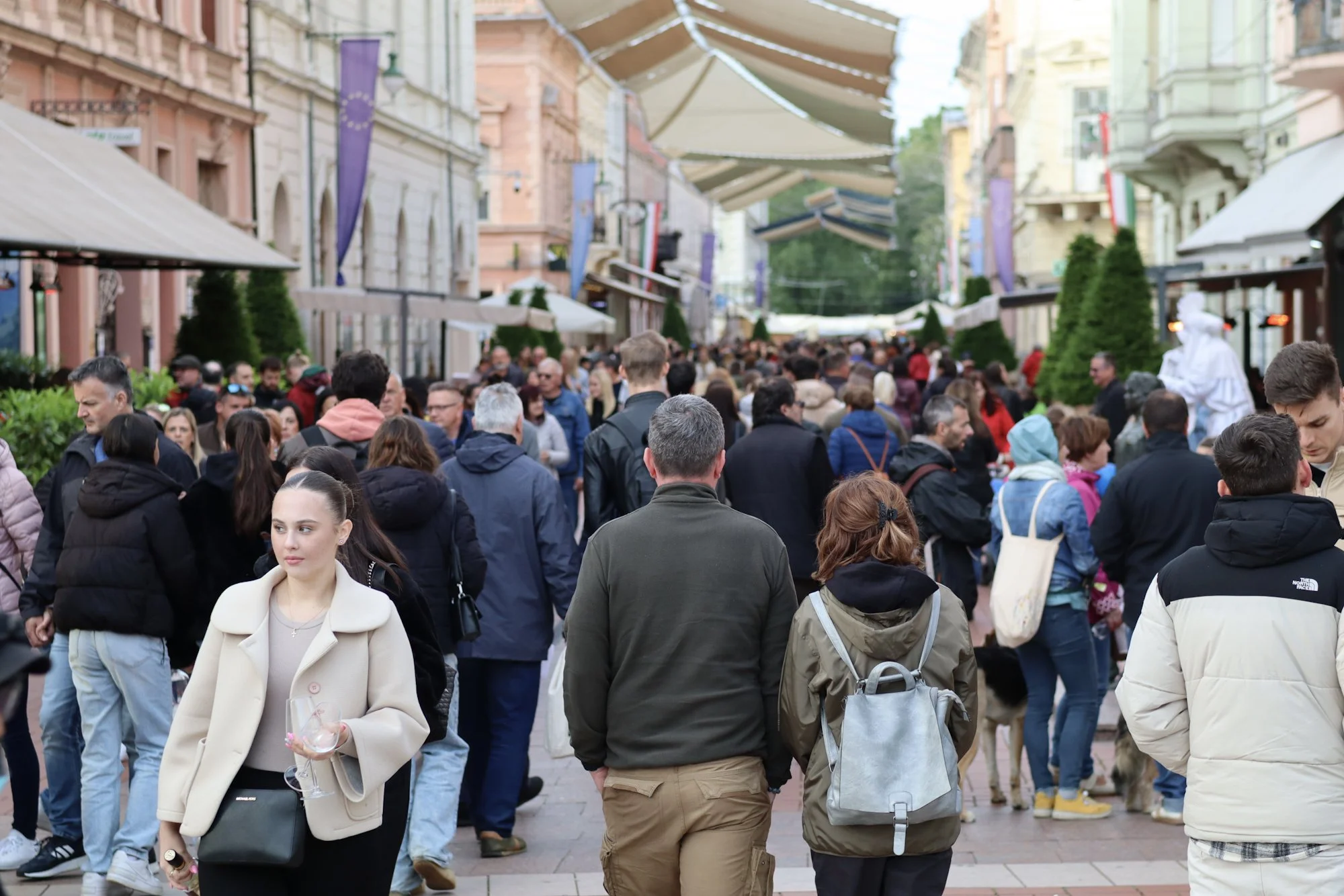
Across Hungary, the result triggered celebrations in major cities, particularly in Budapest, where thousands gathered in central areas after polls closed. Scenes of jubilation were widely reported, with crowds celebrating what many described as a political turning point.
Local media outlet Telex reported heightened public engagement throughout election day and into the evening, with large numbers of people following the results in real time.
In Szeged, large crowds also took to the streets overnight to celebrate. People gathered around the Móra Ferenc Museum and across the city center, with many assembling on the museum’s steps as the results became clear.
Celebrations continued into the early hours, with crowds remaining in the downtown area until around 3–4 a.m., accompanied by chanting, music and fireworks. A brief speech was also delivered in Dugonics Square by Tisza representative Attila Gajda.
Previously on Szegedify
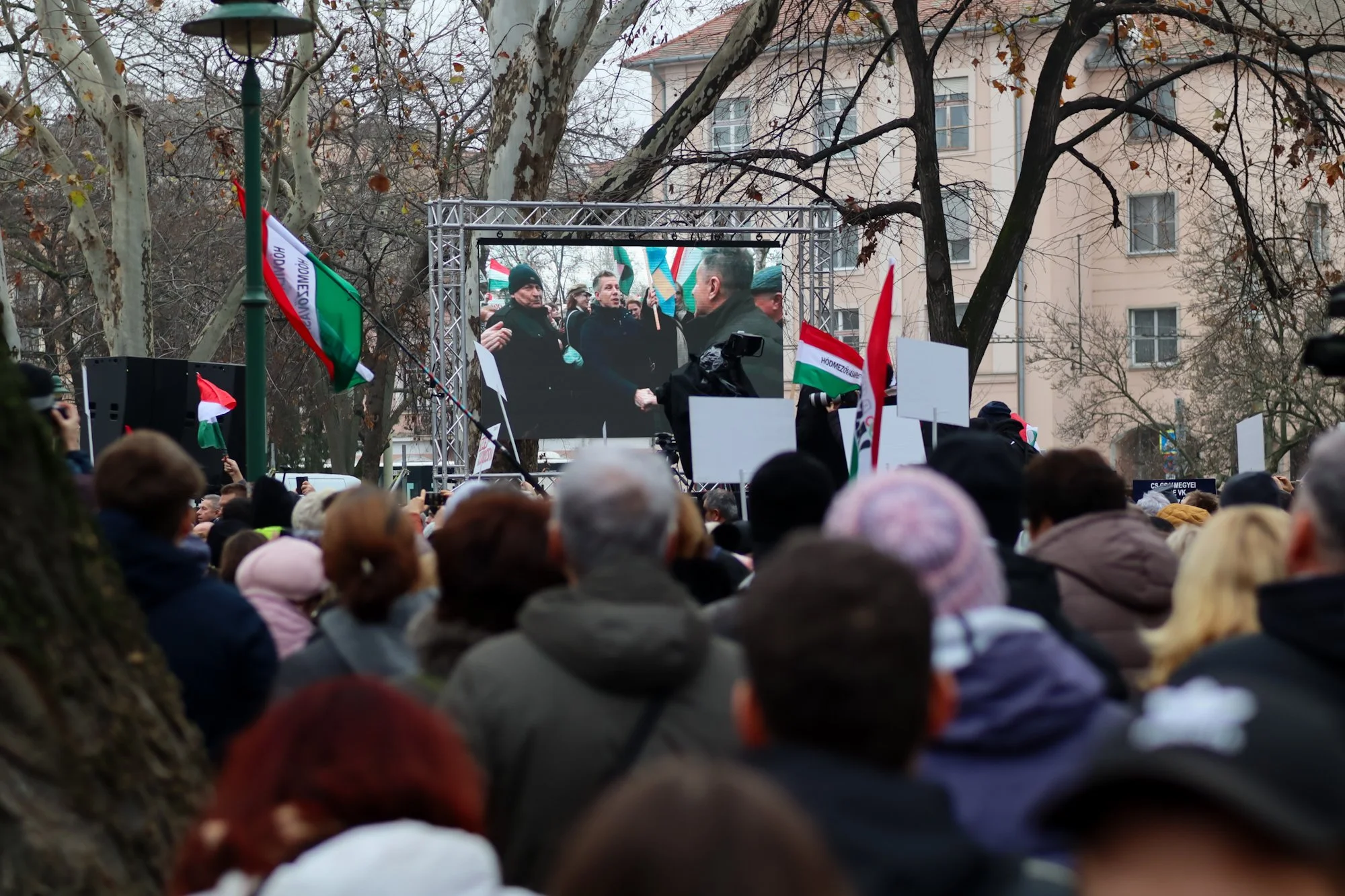
Péter Magyar says Tisza will win all Csongrád-Csanád districts at Szeged rally ahead of April 12 election
Orbán, who has dominated Hungarian politics since 2010, indicated he would remain active in public life from the opposition.
International reaction
The election result drew swift reactions from leaders across Europe and beyond, many of whom welcomed the outcome as a potential reset in Hungary’s relationship with the European Union.
European leaders signaled readiness to work with the incoming government, while Ukraine also expressed openness to strengthening cooperation with Hungary.
Financial markets reacted quickly, with the Hungarian forint strengthening in early trading on expectations of a more predictable policy environment.
Analysts say the result could ease longstanding tensions between Hungary and EU institutions, particularly on rule-of-law issues and funding disputes, while potentially reshaping Hungary’s role within Europe.
What comes next
With a parliamentary supermajority, the incoming government will have broad legislative authority. However, analysts caution that implementing reforms and reshaping institutions built over more than a decade may prove complex.
For many voters, the election outcome reflects concerns over economic conditions, public services and governance, as well as a desire for political change after more than 16 years under the same leadership.
As Hungary enters a new political chapter, attention is now turning to how quickly the new government can deliver on its promises – and how the country’s domestic and international trajectory may shift in the months ahead.
Related