Rheinmetall opens hybrid manufacturing plant in Szeged, creating 300 skilled jobs
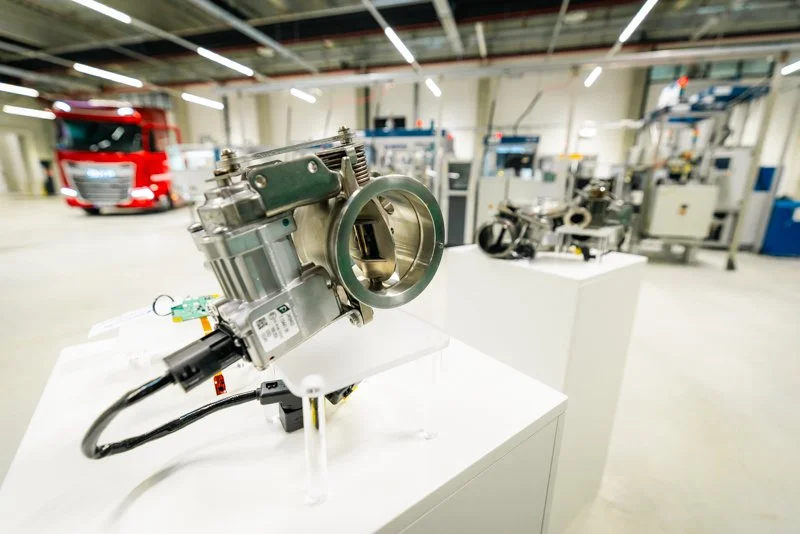
German defense and automotive supplier Rheinmetall has opened a new hybrid manufacturing plant in Szeged, southern Hungary, a project expected to create more than 300 highly skilled jobs by 2030, company and government officials said at the opening ceremony on Dec. 12.
The facility, located in the Science Park of the University of Szeged (SZTE), is Rheinmetall’s first major hybrid site outside Germany, combining civilian and defense-related activities at a single location. The plant will be jointly operated by Rheinmetall’s Power Systems and Electronic Solutions divisions.
Built on an 84,000-square-meter site, the factory was completed in about 16 months and has a total floor area of more than 15,000 square meters, including an approximately 8,600-square-meter production hall. Rheinmetall said further expansion is possible. More than 60 positions have already been filled.
According to the company, the Szeged plant will manufacture high-tech products for e-mobility and hydrogen applications, as well as components for internal combustion engines used in trucks. The site will also produce electronic components for military systems.
The opening ceremony was attended by Christoph Müller, CEO of Rheinmetall’s Power Systems division, and Christian Bludau, chief operating officer of the Electronic Solutions division. Hungarian officials present included Minister of Foreign Affairs and Trade Péter Szijjártó, Szeged Mayor László Botka, and Member of Parliament Béla Mihálffy. University leaders attending included University of Szeged Rector László Rovó, Chancellor Judit Fendler, and Gábor Szabó, chairman of the board of trustees of the Foundation for the University of Szeged.
Rheinmetall said the new facility will also serve as a base for joint research and development activities with the University of Szeged. The university is known for research in materials science and laser technologies and provides infrastructure and expertise for industry partners through its Science Park and related research facilities.
Szijjártó said the investment amounts to 29 billion forints ($80 million), supported by 13 billion forints in government funding. He said the project supports Hungary’s role in future technologies related to electromobility, renewable energy, and advanced manufacturing.
Rheinmetall executives said Szeged was selected because of its academic and research environment and the availability of highly qualified engineers and researchers. The company described the investment as part of its long-term strategy to integrate research, development, and manufacturing at a single location.
The Szeged plant is one of several recent industrial investments in Hungary’s university-linked science parks aimed at strengthening cooperation between higher education and advanced manufacturing.
Source: University of Szeged
Featured image: István Sahin-Tóth / University of Szeged
